FLEET/

BOEING / TECHNICAL EXPLORATION

787

Technical reference: 787-9 Dreamliner

An architecture with greater use of electrical power, a composite structure and a flight deck designed to integrate flight information, navigation and situational awareness.

Fleet project portfolio · Future development

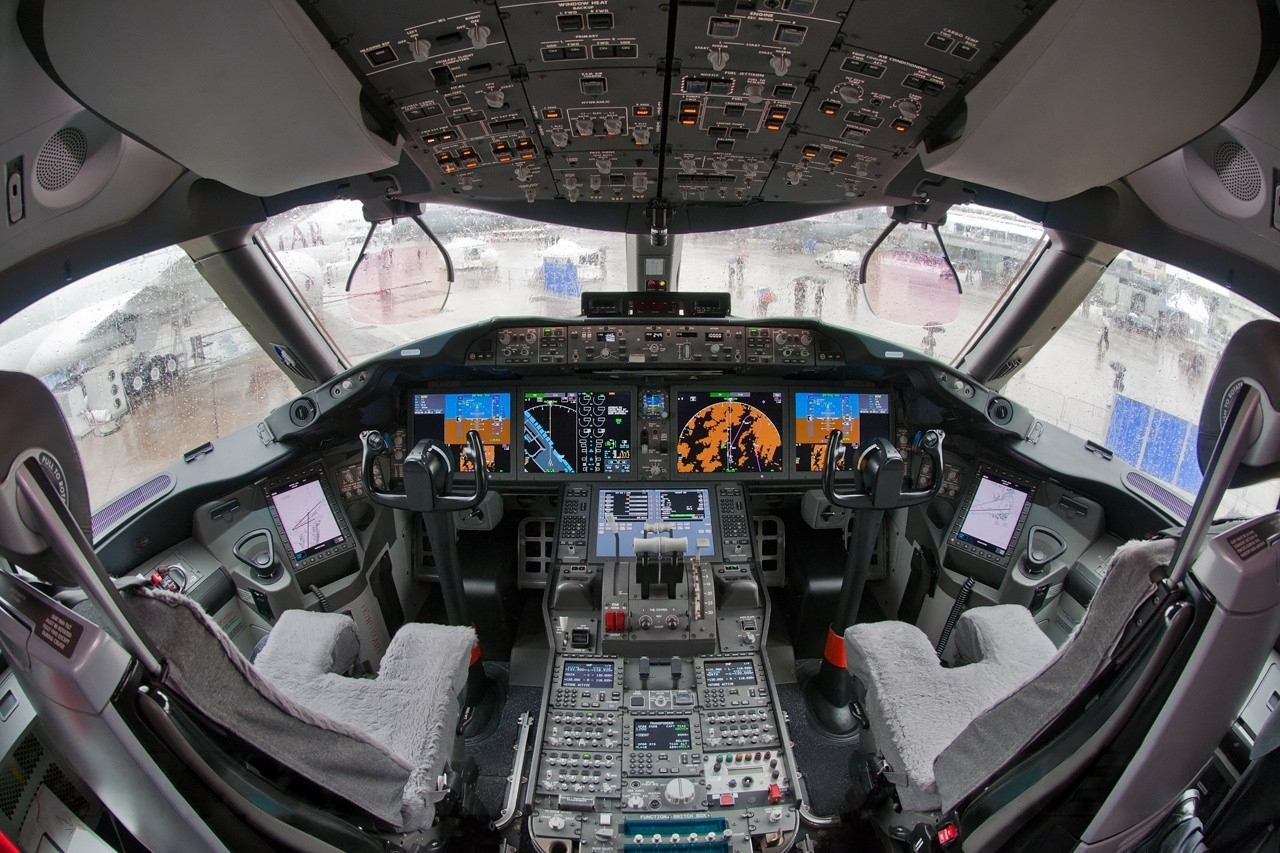
Boeing 787-8 flight deck, N787BA. Family reference photograph; this page’s specifications refer to the 787-9.
Photo: Alex Beltyukov · Original source · CC BY-SA 3.0. Version edited by Commons contributors; history available at the source. Enlarge image ↗

ARCHITECTURE / SYSTEMS

Technology behind the flight deck.

More-electric architecture

The 787 makes greater use of electrical systems in its aircraft architecture. Power generation, distribution and management are therefore important topics for understanding the platform.

Boeing — 787 By Design systems and flight deck ↗

Flight deck and situational awareness

Large LCD displays, dual head-up displays and portable electronic flight bag support feature in Boeing’s description. HUDs place flight information in the pilot’s external line of sight.

Boeing — 787 By Design systems and flight deck ↗

Differences within the family

The 787-9 falls between the 787-8 and 787-10 in length. Although they share a wingspan, the three variants have their own weight limits, capacities and ranges.

Boeing — specifications 787 Dreamliner ↗

MANUFACTURER DATA

Reference specifications.

787-9 Dreamliner · Published data reviewed September 8, 2026.
ParameterPublished reference
Reference variant787-9
Length62.8 m
Wingspan60.1 m
Maximum published MTOW259,220 kg
Published rangeUp to 8,300 NM
Two-class seating — published250–325
Composite structure, by weightApproximately 50%
Flight deck — highlighted featuresLarge LCDs, dual HUD and portable EFB

Boeing — specifications 787 Dreamliner ↗

Published values depend on variant, options and calculation conditions; maximum values do not necessarily apply simultaneously. This technical overview does not replace the AFM, FCOM or approved operational documentation.

Sources and references

Photos illustrate aircraft or interfaces identified in the captions. They do not represent facilities or equipment already acquired by Fleet. EASA, FAA and ANAC certifications remain future project objectives.